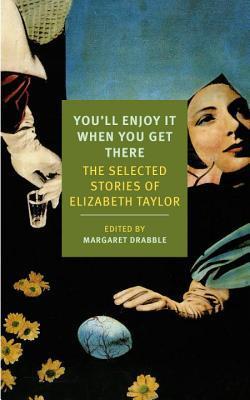



AN NYRB CLASSICS ORIGINAL Elizabeth Taylor is finally beginning to gain the recognition due to her as one of the best English writers of the postwar period, prized and praised by Sarah Waters and Hilary Mantel, among others. Inheriting Ivy Compton-Burnett’s uncanny sensitivity to the terrifying undercurrents that swirl beneath the apparent calm of respectable family life while showing a deep sympathy of her own for human loneliness, Taylor depicted dislocation with the unflinching presence of mind of Graham Greene. But for Taylor, unlike Greene, dislocation began not in distant climes but right at home. It is in the living room, playroom, and bedroom that Taylor stages her unforgettable dramas of alienation and impossible desire. Taylor’s stories, many of which originally appeared in The New Yorker, are her central achievement. Here are self-improving spinsters and gossiping girls, war orphans and wallflowers, honeymooners and barmaids, mistresses and murderers. Margaret Drabble’s new selection reveals a writer whose wide sympathies and restless curiosity are matched by a steely penetration into the human heart and mind.
Author

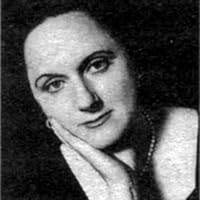
Elizabeth Taylor (née Coles) was a popular English novelist and short story writer. Elizabeth Coles was born in Reading, Berkshire in 1912. She was educated at The Abbey School, Reading, and worked as a governess, as a tutor and as a librarian. In 1936, she married John William Kendall Taylor, a businessman. She lived in Penn, Buckinghamshire, for almost all her married life. Her first novel, At Mrs. Lippincote's, was published in 1945 and was followed by eleven more. Her short stories were published in various magazines and collected in four volumes. She also wrote a children's book. Taylor's work is mainly concerned with the nuances of "everyday" life and situations, which she writes about with dexterity. Her shrewd but affectionate portrayals of middle class and upper middle class English life won her an audience of discriminating readers, as well as loyal friends in the world of letters. She was a friend of the novelist Ivy Compton-Burnett and of the novelist and critic Robert Liddell. Elizabeth Taylor died at age 63 of cancer. Anne Tyler once compared Taylor to Jane Austen, Barbara Pym and Elizabeth Bowen — "soul sisters all," in Tyler's words . In recent years new interest has been kindled by movie makers in her work. French director Francois Ozon, has made "The Real Life of Angel Deverell" which will be released in early 2005. American director Dan Ireland's screen adaptation of Taylor's "Mrs. Palfrey at the Claremont" came out in this country first in 2006 and has made close to $1 million. A British distributor picked it up at Cannes, and the movie was released in England in 2009.