Margins


548 Market St PMB 65688, San Francisco California 94104-5401 USA
© 2026 Paratext Inc. All rights reserved
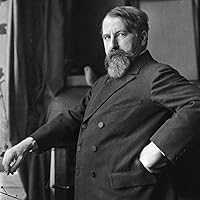
Arthur Schnitzler was an Austrian author and dramatist. The son of a prominent Hungarian-Jewish laryngologist Johann Schnitzler and Luise Markbreiter (a daughter of the Viennese doctor Philipp Markbreiter), was born in Vienna in the Austro-Hungarian Empire, and began studying medicine at the local university in 1879. He received his doctorate of medicine in 1885 and worked at the Vienna's General Hospital, but ultimately abandoned medicine in favour of writing. His works were often controversial, both for their frank description of sexuality (Sigmund Freud, in a letter to Schnitzler, confessed "I have gained the impression that you have learned through intuition—though actually as a result of sensitive introspection—everything that I have had to unearth by laborious work on other persons")[1] and for their strong stand against anti-Semitism, represented by works such as his play Professor Bernhardi and the novel Der Weg ins Freie. However, though Schnitzler was himself Jewish, Professor Bernhardi and Fräulein Else are among the few clearly-identified Jewish protagonists in his work. Schnitzler was branded as a pornographer after the release of his play Reigen, in which ten pairs of characters are shown before and after the sexual act, leading and ending with a prostitute. The furore after this play was couched in the strongest anti-semitic terms;[2] his works would later be cited as "Jewish filth" by Adolf Hitler. Reigen was made into a French language film in 1950 by the German-born director Max Ophüls as La Ronde. The film achieved considerable success in the English-speaking world, with the result that Schnitzler's play is better known there under Ophüls' French title. In the novella, Fräulein Else (1924), Schnitzler may be rebutting a contentious critique of the Jewish character by Otto Weininger (1903) by positioning the sexuality of the young female Jewish protagonist.[3] The story, a first-person stream of consciousness narrative by a young aristocratic woman, reveals a moral dilemma that ends in tragedy. In response to an interviewer who asked Schnitzler what he thought about the critical view that his works all seemed to treat the same subjects, he replied, "I write of love and death. What other subjects are there?" Despite his seriousness of purpose, Schnitzler frequently approaches the bedroom farce in his plays (and had an affair with one of his actresses, Adele Sandrock). Professor Bernhardi, a play about a Jewish doctor who turns away a Catholic priest in order to spare a patient the realization that she is on the point of death, is his only major dramatic work without a sexual theme. A member of the avant-garde group Young Vienna (Jung Wien), Schnitzler toyed with formal as well as social conventions. With his 1900 short story Lieutenant Gustl, he was the first to write German fiction in stream-of-consciousness narration. The story is an unflattering portrait of its protagonist and of the army's obsessive code of formal honour. It caused Schnitzler to be stripped of his commission as a reserve officer in the medical corps—something that should be seen against the rising tide of anti-semitism of the time. He specialized in shorter works like novellas and one-act plays. And in his short stories like "The Green Tie" ("Die grüne Krawatte") he showed himself to be one of the early masters of microfiction. However he also wrote two full-length novels: Der Weg ins Freie about a talented but not very motivated young composer, a brilliant description of a segment of pre-World War I Viennese society; and the artistically less satisfactory Therese. In addition to his plays and fiction, Schnitzler meticulously kept a diary from the age of 17 until two days before his death, of a brain hemorrhage in Vienna. The manuscript, which runs to almost 8,000 pages, is most notable for Schnitzler's cas
2026
2026
2026
2025
2021
2019
2019
2014
2013
2012
2011
2011
2010
2009
2006
Novellas and Stories
2006
2005
Three Novellas
2003
2002
2002
2000
1999
Four Major Plays
1999
1999
مجموعه ۴۵ داستان کوتاه از ۲۶ نویسنده آلمانیزبان
1997
1993
1991
Leutnant Gustl; Fräulein Else
1989
1986
1982
Games With Love And Death
1974
1969
1931
1931
1928
1927
1927
And Other Stories and Novellas
1926
1926
1926
Erzählungen
1924
1924
1918
1914
1913
1912
1911
1908
1907
1902