Authors

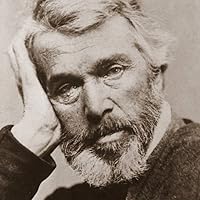
Thomas Carlyle, Scottish historian, critic, and sociological writer. was born in the village of Ecclefechan, Dumfriesshire, eldest child of James Carlyle, stonemason, and Margaret (Aitken) Carlyle. The father was stern, irascible, a puritan of the puritans, but withal a man of rigid probity and strength of character. The mother, too, was of the Scottish earth, and Thomas' education was begun at home by both the parents. From the age of five to nine he was at the village school; from nine to fourteen at Annan Grammar School. where he showed proficiency in mathematics and was well grounded in French and Latin. In November 1809 he walked to Edinburgh, and attended courses at the University till 1814, with the ultimate aim of becoming a minister. He left without a degree, became a mathematical tutor at Annan Academy in 1814, and three years later abandoned all thoughts of entering the Kirk, having reached a theological position incompatible with its teachings. He had begun to learn German in Edinburgh, and had done much independent reading outside the regular curriculum. Late in 1816 he moved to a school in Kirkcaldy, where he became the intimate associate of Edward Irving, an old boy of Annan School, and now also a schoolmaster. This contact was Carlyle's first experience of true intellectual companionship, and the two men became lifelong friends. He remained there two years, was attracted by Margaret Gordon, a lady of good family (whose friends vetoed an engagement), and in October 1818 gave up schoolmastering and went to Edinburgh, where he took mathematical pupils and made some show of reading law. During this period in the Scottish capital he began to suffer agonies from a gastric complaint which continued to torment him all his life, and may well have played a large part in shaping the rugged, rude fabric of his philosophy. In literature he had at first little success, a series of articles for the Edinburgh Encyclopaedia bringing in little money and no special credit. In 1820 and 1821 he visited Irving in Glasgow and made long stays at his father's new farm, Mainhill; and in June 1821, in Leith Walk, Edinburgh, he experienced a striking spiritual rebirth which is related in Sartor Resartus. Put briefly and prosaically, it consisted in a sudden clearing away of doubts as to the beneficent organization of the universe; a semi-mystical conviction that he was free to think and work, and that honest effort and striving would not be thwarted by what he called the "Everlasting No." For about a year, from the spring of 1823, Carlyle was tutor to Charles and Arthur Buller, young men of substance, first in Edinburgh and later at Dunkeld. Now likewise appeared the first fruits of his deep studies in German, the Life of Schiller, which was published serially in the London Magazine in 1823-24 and issued as a separate volume in 1825. A second garner from the same field was his version of Goethe's Wilhelm Meister which earned the praise of Blackwood's and was at once recognized as a very masterly rendering. In 1821 Irving had gone to London, and in June 1821 Carlyle followed, in the train of his employers, the Bullers. But he soon resigned his tutorship, and, after a few weeks at Birmingham, trying a dyspepsia cure, he lived with Irving at Pentonville, London, and paid a short visit to Paris. March 1825 saw him back; in Scotland, on his brother's farm, Hoddam Hill, near the Solway. Here for a year he worked hard at German translations, perhaps more serenely than before or after and free from that noise which was always a curse to his sensitive ear and which later caused him to build a sound-proof room in his Chelsea home. Before leaving for London Irving had introduced Carlyle to Jane Baillie Welsh daughter of the surgeon, John Welsh, and descended from John Knox. She was beautiful, precociously learned, talented, and a brilliant mistress of cynical satire. Among her numerous suitors, the rough, uncouth

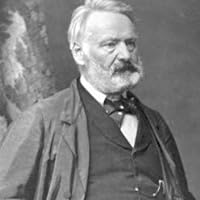
After Napoleon III seized power in 1851, French writer Victor Marie Hugo went into exile and in 1870 returned to France; his novels include The Hunchback of Notre Dame (1831) and Les Misérables (1862). This poet, playwright, novelist, dramatist, essayist, visual artist, statesman, and perhaps the most influential, important exponent of the Romantic movement in France, campaigned for human rights. People in France regard him as one of greatest poets of that country and know him better abroad.

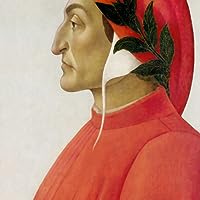
Dante Alighieri, or simply Dante (May 14/June 13 1265 – September 13/14, 1321), is one of the greatest poets in the Italian language; with the comic story-teller, Boccaccio, and the poet, Petrarch, he forms the classic trio of Italian authors. Dante Alighieri was born in the city-state Florence in 1265. He first saw the woman, or rather the child, who was to become the poetic love of his life when he was almost nine years old and she was some months younger. In fact, Beatrice married another man, Simone di' Bardi, and died when Dante was 25, so their relationship existed almost entirely in Dante's imagination, but she nonetheless plays an extremely important role in his poetry. Dante attributed all the heavenly virtues to her soul and imagined, in his masterpiece The Divine Comedy, that she was his guardian angel who alternately berated and encouraged him on his search for salvation. Politics as well as love deeply influenced Dante's literary and emotional life. Renaissance Florence was a thriving, but not a peaceful city: different opposing factions continually struggled for dominance there. The Guelfs and the Ghibellines were the two major factions, and in fact that division was important in all of Italy and other countries as well. The Pope and the Holy Roman Emperor were political rivals for much of this time period, and in general the Guelfs were in favor of the Pope, while the Ghibellines supported Imperial power. By 1289 in the battle of Campaldino the Ghibellines largely disappeared from Florence. Peace, however, did not insue. Instead, the Guelf party divided between the Whites and the Blacks (Dante was a White Guelf). The Whites were more opposed to Papal power than the Blacks, and tended to favor the emperor, so in fact the preoccupations of the White Guelfs were much like those of the defeated Ghibellines. In this divisive atmosphere Dante rose to a position of leadership. in 1302, while he was in Rome on a diplomatic mission to the Pope, the Blacks in Florence seized power with the help of the French (and pro-Pope) Charles of Valois. The Blacks exiled Dante, confiscating his goods and condemning him to be burned if he should return to Florence. Dante never returned to Florence. He wandered from city to city, depending on noble patrons there. Between 1302 and 1304 some attempts were made by the exiled Whites to retrieve their position in Florence, but none of these succeeded and Dante contented himself with hoping for the appearance of a new powerful Holy Roman Emperor who would unite the country and banish strife. Henry VII was elected Emperor in 1308, and indeed laid seige to Florence in 1312, but was defeated, and he died a year later, destroying Dante's hopes. Dante passed from court to court, writing passionate political and moral epistles and finishing his Divine Comedy, which contains the Inferno, Purgatorio, and Paradiso. He finally died in Ravenna in 1321.