Margins
Il disagio nella civiltà book cover
Il disagio nella civiltà
2021
First Published
3.94
Average Rating
311
Number of Pages
Siamo a cavallo degli anni venti e trenta del Novecento e una feconda intuizione riporta Freud a leggere le dinamiche della società attraverso il prisma delle categorie psicoanalitiche elaborate nei precedenti trent’anni di ricerca, delineando una concezione del vivere comune come sistema che, originato dalla condivisa necessità di contrastare le minacce alla sopravvivenza umana, finisce inevitabilmente per porre limiti importanti alle pulsioni naturali del singolo. L’evolversi e l’articolarsi della civiltà si configurerebbero quindi come un processo di erosione della felicità e della libertà individuali. È sull’equilibrio teso e precario fra necessità confliggenti ma ugualmente ineludibili che si gioca, secondo Freud, il futuro dell’umanità. Questo breve ma decisivo testo appare oggi come il ritratto lucido di un’epoca destinata a chiudersi nella stretta feroce del nazismo e del fascismo, ma anche come una lettura calzante della nostra contemporaneità, sempre più pervasa da inquietudini private e collettive.

Avg Rating
3.94
Number of Ratings
17
5 STARS
35%
4 STARS
35%
3 STARS
18%
2 STARS
12%
1 STARS
0%
goodreads

Author

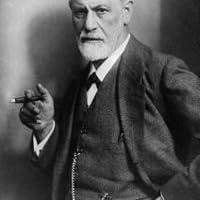
Sigmund Freud
Sigmund Freud
Author · 206 books

Dr. Sigismund Freud (later changed to Sigmund) was a neurologist and the founder of psychoanalysis, who created an entirely new approach to the understanding of the human personality. He is regarded as one of the most influential—and controversial—minds of the 20th century. In 1873, Freud began to study medicine at the University of Vienna. After graduating, he worked at the Vienna General Hospital. He collaborated with Josef Breuer in treating hysteria by the recall of painful experiences under hypnosis. In 1885, Freud went to Paris as a student of the neurologist Jean Charcot. On his return to Vienna the following year, Freud set up in private practice, specialising in nervous and brain disorders. The same year he married Martha Bernays, with whom he had six children. Freud developed the theory that humans have an unconscious in which sexual and aggressive impulses are in perpetual conflict for supremacy with the defences against them. In 1897, he began an intensive analysis of himself. In 1900, his major work 'The Interpretation of Dreams' was published in which Freud analysed dreams in terms of unconscious desires and experiences. In 1902, Freud was appointed Professor of Neuropathology at the University of Vienna, a post he held until 1938. Although the medical establishment disagreed with many of his theories, a group of pupils and followers began to gather around Freud. In 1910, the International Psychoanalytic Association was founded with Carl Jung, a close associate of Freud's, as the president. Jung later broke with Freud and developed his own theories. After World War One, Freud spent less time in clinical observation and concentrated on the application of his theories to history, art, literature and anthropology. In 1923, he published 'The Ego and the Id', which suggested a new structural model of the mind, divided into the 'id, the 'ego' and the 'superego'. In 1933, the Nazis publicly burnt a number of Freud's books. In 1938, shortly after the Nazis annexed Austria, Freud left Vienna for London with his wife and daughter Anna. Freud had been diagnosed with cancer of the jaw in 1923, and underwent more than 30 operations. He died of cancer on 23 September 1939.

548 Market St PMB 65688, San Francisco California 94104-5401 USA
© 2026 Paratext Inc. All rights reserved