



Margins
Intolerable book cover
Intolerable
Writings from Michel Foucault and the Prisons Information Group
2021
First Published
4.86
Average Rating
456
Number of Pages

A groundbreaking collection of writings by Michel Foucault and the Prisons Information Group documenting their efforts to expose France’s inhumane treatment of prisoners Founded by Michel Foucault and others in 1970–71, the Prisons Information Group (GIP) circulated information about the inhumane conditions within the French prison system. Intolerable makes available for the first time in English a fully annotated compilation of materials produced by the GIP during its brief but influential existence, including an exclusive new interview with GIP member Hélène Cixous and writings by Gilles Deleuze and Jean Genet. These archival documents—public announcements, manifestos, reports, pamphlets, interventions, press conference statements, interviews, and round table discussions—trace the GIP’s establishment in post-1968 political turmoil, the new models of social activism it pioneered, the prison revolts it supported across France, and the retrospective assessments that followed its denouement. At the same time, Intolerable offers a rich, concrete exploration of Foucault’s concept of resistance, providing a new understanding of the arc of his intellectual development and the genesis of his most influential book, Discipline and Punish . Presenting the account of France’s most vibrant prison resistance movement in its own words and on its own terms, this significant and relevant collection also connects the approach and activities of the GIP to radical prison resistance movements today.
Avg Rating
4.86
Number of Ratings
7
5 STARS
86%
4 STARS
14%
3 STARS
0%
2 STARS
0%
1 STARS
0%
goodreads

Authors

Michel Foucault
Michel Foucault
Author · 97 books

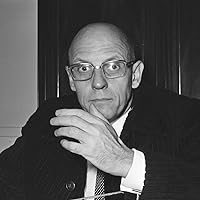
Michel Foucault was a French philosopher, social theorist and historian of ideas. He held a chair at the Collège de France with the title "History of Systems of Thought," but before he was Professor at University of Tunis, Tunisia, and then Professor at University Paris VIII. He lectured at several different Universities over the world as at the University at Buffalo, the University of California, Berkeley and University of São Paulo, University of Rio de Janeiro, Brazil. Foucault is best known for his critical studies of social institutions, most notably psychiatry, medicine, the human sciences and the prison system, as well as for his work on the history of human sexuality. His writings on power, knowledge, and discourse have been widely influential in academic circles. In the 1960s Foucault was associated with structuralism, a movement from which he distanced himself. Foucault also rejected the poststructuralist and postmodernist labels later attributed to him, preferring to classify his thought as a critical history of modernity rooted in Immanuel Kant. Foucault's project was particularly influenced by Nietzsche, his "genealogy of knowledge" being a direct allusion to Nietzsche's "genealogy of morality". In a late interview he definitively stated: "I am a Nietzschean." Foucault was listed as the most cited scholar in the humanities in 2007 by the ISI Web of Science.

548 Market St PMB 65688, San Francisco California 94104-5401 USA
© 2026 Paratext Inc. All rights reserved