Authors


Fumiko Hayashi (林 芙美子), December 31, 1903 or 1904 (Japanese sources disagree on the birth year) - June 28, 1951) was a Japanese novelist and poet. When Hayashi was seven, her mother ran away with a manager of her common-law husband's store, and afterwards the three worked in Kyūshū as itinerant merchants. After graduating from high school in 1922, Hayashi moved to Tokyo with a lover and lived with several men until settling into marriage with the painter Rokubin Tezuka (手塚 緑敏?) in 1926. Many of her works revolve around themes of free spirited women and troubled relationships. One of her best-known works is Hōrōki (translated into English as "Vagabond's Song" or "Vagabond's Diary") (放浪記, 1927), which was adapted into the anime Wandering Days. Another is her late novel Ukigumo (Floating Clouds, 1951), which was made into a movie by Mikio Naruse in 1955. Hayashi's work is notable as well for its feminist themes. She was later to face criticism for accepting sponsored-trips by the Japanese military government to occupied China, from where she reported positively on Japanese administration. Until the 1980s, "women's literature" (joryu bungaku) was considered a separate category from other modern Japanese literature. It was critically disparaged as popular but too sentimental. But Ericson's (1997) translations and analysis of the immensely popular Hōrōki and Suisen (Narcissus) suggest that Hayashi's appeal is rooted in the clarity with which she conveys the humanity not just of women, but also others on the underside of Japanese society.

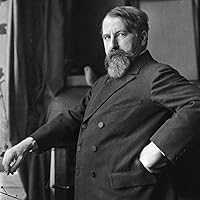
Arthur Schnitzler was an Austrian author and dramatist. The son of a prominent Hungarian-Jewish laryngologist Johann Schnitzler and Luise Markbreiter (a daughter of the Viennese doctor Philipp Markbreiter), was born in Vienna in the Austro-Hungarian Empire, and began studying medicine at the local university in 1879. He received his doctorate of medicine in 1885 and worked at the Vienna's General Hospital, but ultimately abandoned medicine in favour of writing. His works were often controversial, both for their frank description of sexuality (Sigmund Freud, in a letter to Schnitzler, confessed "I have gained the impression that you have learned through intuition—though actually as a result of sensitive introspection—everything that I have had to unearth by laborious work on other persons")[1] and for their strong stand against anti-Semitism, represented by works such as his play Professor Bernhardi and the novel Der Weg ins Freie. However, though Schnitzler was himself Jewish, Professor Bernhardi and Fräulein Else are among the few clearly-identified Jewish protagonists in his work. Schnitzler was branded as a pornographer after the release of his play Reigen, in which ten pairs of characters are shown before and after the sexual act, leading and ending with a prostitute. The furore after this play was couched in the strongest anti-semitic terms;[2] his works would later be cited as "Jewish filth" by Adolf Hitler. Reigen was made into a French language film in 1950 by the German-born director Max Ophüls as La Ronde. The film achieved considerable success in the English-speaking world, with the result that Schnitzler's play is better known there under Ophüls' French title. In the novella, Fräulein Else (1924), Schnitzler may be rebutting a contentious critique of the Jewish character by Otto Weininger (1903) by positioning the sexuality of the young female Jewish protagonist.[3] The story, a first-person stream of consciousness narrative by a young aristocratic woman, reveals a moral dilemma that ends in tragedy. In response to an interviewer who asked Schnitzler what he thought about the critical view that his works all seemed to treat the same subjects, he replied, "I write of love and death. What other subjects are there?" Despite his seriousness of purpose, Schnitzler frequently approaches the bedroom farce in his plays (and had an affair with one of his actresses, Adele Sandrock). Professor Bernhardi, a play about a Jewish doctor who turns away a Catholic priest in order to spare a patient the realization that she is on the point of death, is his only major dramatic work without a sexual theme. A member of the avant-garde group Young Vienna (Jung Wien), Schnitzler toyed with formal as well as social conventions. With his 1900 short story Lieutenant Gustl, he was the first to write German fiction in stream-of-consciousness narration. The story is an unflattering portrait of its protagonist and of the army's obsessive code of formal honour. It caused Schnitzler to be stripped of his commission as a reserve officer in the medical corps—something that should be seen against the rising tide of anti-semitism of the time. He specialized in shorter works like novellas and one-act plays. And in his short stories like "The Green Tie" ("Die grüne Krawatte") he showed himself to be one of the early masters of microfiction. However he also wrote two full-length novels: Der Weg ins Freie about a talented but not very motivated young composer, a brilliant description of a segment of pre-World War I Viennese society; and the artistically less satisfactory Therese. In addition to his plays and fiction, Schnitzler meticulously kept a diary from the age of 17 until two days before his death, of a brain hemorrhage in Vienna. The manuscript, which runs to almost 8,000 pages, is most notable for Schnitzler's cas

Marcelo Birmajer was born the 29th of November of 1966 in Buenos Aires, Argentina. His pearents were jews that emigrated to this country from Europe. At the age of twenty years old he started working as a writer for "Fierro" magazine (argentinian comic magazine). After that he also worked for several newspapers as a writter and he also wrote some movie scripts. Marcelo's first contact whit book writing was caused by Pablo De Santis, a fellow writter he met in Fierro magazine. He was organizing some book collection, and he asked Marcelo to write some short novels. That's when he wrote "Un crimen secundario", "Un veneno saludable" and "Derrotado por un muerto" His works go from comic book stories to short tales, novels and essays. He's the co-author of the movie script "El abrazo partido" (Daniel Burman, 2001), winner of a variety of prizes. He also took part in the creating of "Sol de Noche" script. He has won the Konex 2004 award as one of the five best writers of the decade (1994-2003) in the young adult field. In 2011 he won this award again, as one of the five best movie script writters of the decade (2001-2011). He lives in Buenos Aires city, with his wife Debora and his three kids.


Abelardo Castillo nace en Buenos Aires, pero toma como lugar de nacimiento, por decisión, la ciudad costera bonaerense de San Pedro, adonde se traslada con su padre, y donde vive hasta los 18 años. Publica sus primeros cuentos en 1959. Gana un premio en el concurso de la revista "Vea y Lea" en 1959 (jurado: Borges, Bioy Casares y Peyrou). Funda "El Grillo de Papel", continuada por "El Escarabajo de Oro", una de las revistas literarias de más larga vida (1959-1974), enfocada por su adhesión al existencialismo, al compromiso sartreano del escritor. Luego, desde 1977 hasta 1986, dirige "El Ornitorrinco". Ha obtenido varios premios nacionales e internacionales y algunos de sus cuentos, novelas y obras de teatro, han sido traducidos al inglés, francés, italiano, alemán, eslovaco, ruso y polaco.