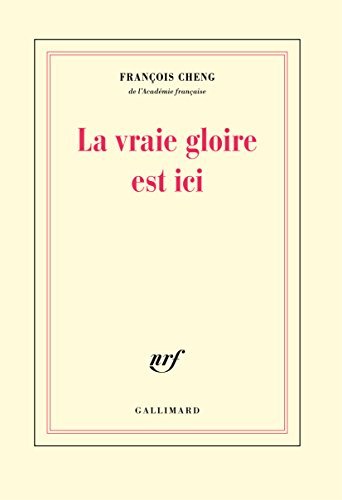



Avec ce livre, au titre qui a tout d’un énoncé manifeste, François Cheng ose de déroutants alliages : l’âpreté et la joie, le silence et la lucidité, la mort et les nuages, les oiseaux et les larmes, l’émoi et les étoiles… C’est qu’à force d’avoir mordu la poussière d’ici-bas les mots n’en finissent plus de renaître. Des âmes errantes ou du phénix, on ne sait qui mène la danse. Mais il suffit de la splendeur d’un soir pour que l’univers entier résonne soudain. Il suffit de la sincérité d’un seul cœur brisé pour que la fulgurante beauté délivre de la fragilité humaine : Car tout est à revoir, Tous les rires, tous les pleurs, Toute la gloire… Il y a dans ces pages un souffle de vie qui prend à la gorge. Sans doute parce qu’il provient d’une voix sans autre exemple. D'une voix qui éperonne la pensée, avec une acuité foudroyante et douce. La parole de François Cheng est bien celle d’un penseur, d’un poète, d’un sage passionné qui ne craint rien, pas même d’affirmer que "la vraie gloire est ici".
Author

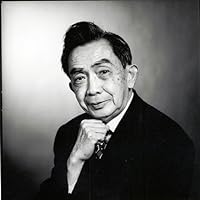
François Cheng is a French academician, writer, poet and calligrapher. He is the author of essays, novels, collections of poetry and books on art written in the French language, and the translator of some of the great French poets into Chinese. Born in China and taking French citizenship in 1973, he was elected to the Académie française in 2002, and was the first person of Asian origin to be a member of the Academy. He was the winner of the 1998 Prix Femina for Le Dit de Tianyi ("The saying of Tianyi") When Cheng arrived in France in 1948, on a study grant, he did not speak a word of the language. He subsequently adapted quickly and profoundly. In his speech to the Académie française, he explained, "I became a Frenchman in law, mind and heart more than thirty years ago [...] especially from that moment when I resolutely went over to the French language, making it the weapon, or the soul, of my creative work. This language, how can I say everything that I owe to it? It is so intimately bound up with the way I live and my inner life that it has proved to be the emblem of my destiny." It took many years before he became a novelist. His first works were on Chinese poetry and painting. Later he began to write works of poetry himself, before finally turning to the writing of novels.