Authors

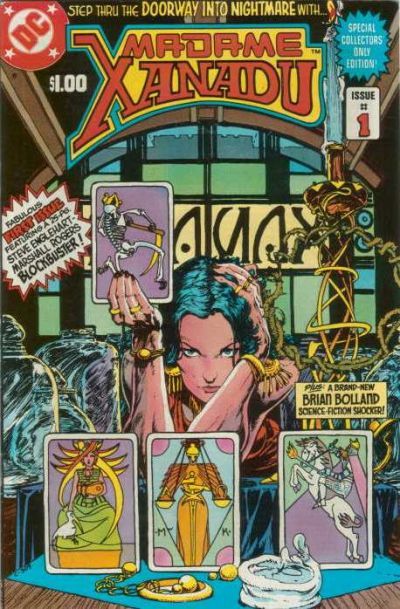
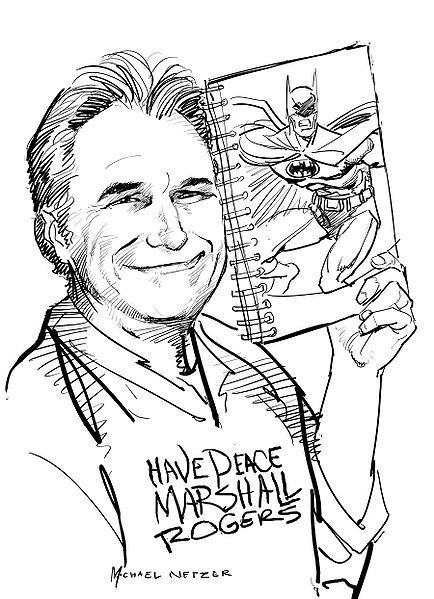
Marshall Rogers studied architectural drawing, and his work was characterized by the depiction of characters with relatively human proportions rather than exaggerated musculature, and by detailed rendering of buildings and structures. Some of his first comic-book work appeared in the black-and-white magazine The Deadly Hands of Kung Fu, where he worked with writer Chris Claremont on a story featuring the "Iron Fist" supporting characters Misty Knight and Colleen Wing as the Daughters of the Dragon. He eschewed the grey wash that was used in other black-and-white comics stories in favour of applying screentone. With writer Steve Englehart, Rogers penciled an acclaimed run on the character Batman in Detective Comics #471-476 (Aug. 1977 - April 1978), providing one of the definitive interpretations that influenced the 1989 movie Batman and be adapted for the 1990s animated series. He also penciled the origin story of the Golden Age Batman in Secret Origins #6 (Sept. 1986) with writer Roy Thomas and inker Terry Austin. The two also did a sequel miniseries, Batman: Dark Detective, and had worked together on other series, such as The Silver Surfer. Also striking was Rogers' short run on DC's revived "Mister Miracle" series. Englehart and Rogers' first Batman run was collected in the trade paperbacks Batman: Strange Apparitions and the second run, Batman: Dark Detective. He did independent work at Eclipse Comics and others. This included the first Coyote series with Englehart, and his own Capt. Quick and the Foozle. Portrait by: Marshall Rogers

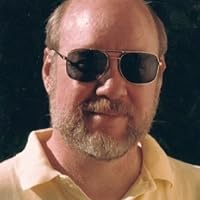
See also John Harkness. Steve Englehart went to Wesleyan University in Middletown, Connecticut. After a stint in the Army, he moved to New York and began to write for Marvel Comics. That led to long runs on Captain America, The Hulk, The Avengers, Dr. Strange, and a dozen other titles. Midway through that period he moved to California (where he remains), and met and married his wife Terry. He was finally hired away from Marvel by DC Comics, to be their lead writer and revamp their core characters (Superman, Batman, Wonder Woman, Flash, and Green Lantern). He did, but he also wrote a solo Batman series (immediately dubbed the "definitive" version) that later became Warner Brothers' first Batman film (the good one). After that he left comics for a time, traveled in Europe for a year, wrote a novel (The Point Man™), and came back to design video games for Atari (E.T., Garfield). But he still liked comics, so he created Coyote™, which within its first year was rated one of America's ten best series. Other projects he owned (Scorpio Rose™, The Djinn™) were mixed with company series (Green Lantern [with Joe Staton], Silver Surfer, Fantastic Four). Meanwhile, he continued his game design for Activision, Electronic Arts, Sega, and Brøderbund. And once he and Terry had their two sons, Alex and Eric, he naturally told them stories. Rustle's Christmas Adventure was first devised for them. He went on to add a run of mid-grade books to his bibliography, including the DNAgers™ adventure series, and Countdown to Flight, a biography of the Wright brothers selected by NASA as the basis for their school curriculum on the invention of the airplane. In 1992 Steve was asked to co-create a comics pantheon called the Ultraverse. One of his contributions, The Night Man, became not only a successful comics series, but also a television show. That led to more Hollywood work, including animated series such as Street Fighter, GI Joe, and Team Atlantis for Disney.