Margins
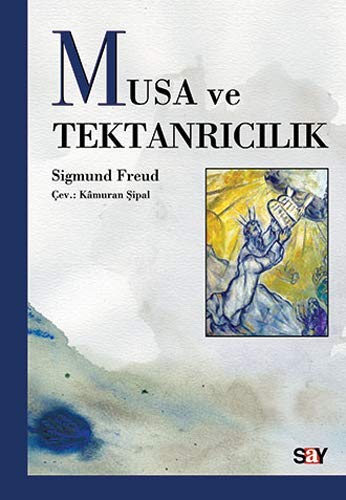
Musa Ve Tektanricilik book cover
Musa Ve Tektanricilik
2015
First Published
4.44
Average Rating
248
Number of Pages
"Bir halkin, ogullarinin arasinda en buyugu saydigi bir adami elinden almak, severek ya da kolayca yapilacak bir sey degildir, ozellikle kendiniz de bu halktansaniz. Fakat gerceklik arayisinda, hicbir guc, sozde milli cikarlar ugruna bizi yolumuzdan alikoyamaz ve konuyu acikliga kavusturmaya calisirken tum bunlarin bizim dagarcigimiza da faydasi olabilecegi beklentisi icinde olabiliriz elbet."Freud'un, Totem ve Tabu'dan 25 yil sonra yazdigi ve en tartismali kitaplarindan biri olan Musa ve Tektanrili Din, Musa'nin Yahudi olmadigi, gercekte Eski Misir asilli oldugu, Misirli bir tektanrici olan Akhneton'un yakin takipcisi hatta bizzat kendisi olabilecegi iddialari uzerine temelleniyor. Bu iddialari aciklayan uc ana bolume ilave olarak ele alinan son bir bolumde ise, tarihsel olaylarla ilgili hipotez uretme araci olarak psikanalitik teori uzerinde duruluyor.Yahudi halkinin bircok ozelligini anlama, ozellikle de dinin yapisina yeni bir bakis kazanma firsati yakalayan ve onceki kitaplari Totem ve Tabu ve Bir Yanilsamanin Gelecegi'nde dile getirdigi dusuncelerden yola cikan Freud, Musa ve Tektanrili Din'de bu dusuncelerini "daha adil bir formul ile" gelistiriyor. Bulgusu ise "Dinin gucu gercekligine dayanir, ancak bu gerceklik maddi degil, tarihidir."Ince Sayfa 248Baski 2015 Sayfa 94Baski 2016 Say Yayinlari

Avg Rating
4.44
Number of Ratings
16
5 STARS
50%
4 STARS
44%
3 STARS
6%
2 STARS
0%
1 STARS
0%
goodreads

Author

Sigmund Freud
Sigmund Freud
Author · 206 books

Dr. Sigismund Freud (later changed to Sigmund) was a neurologist and the founder of psychoanalysis, who created an entirely new approach to the understanding of the human personality. He is regarded as one of the most influential—and controversial—minds of the 20th century. In 1873, Freud began to study medicine at the University of Vienna. After graduating, he worked at the Vienna General Hospital. He collaborated with Josef Breuer in treating hysteria by the recall of painful experiences under hypnosis. In 1885, Freud went to Paris as a student of the neurologist Jean Charcot. On his return to Vienna the following year, Freud set up in private practice, specialising in nervous and brain disorders. The same year he married Martha Bernays, with whom he had six children. Freud developed the theory that humans have an unconscious in which sexual and aggressive impulses are in perpetual conflict for supremacy with the defences against them. In 1897, he began an intensive analysis of himself. In 1900, his major work 'The Interpretation of Dreams' was published in which Freud analysed dreams in terms of unconscious desires and experiences. In 1902, Freud was appointed Professor of Neuropathology at the University of Vienna, a post he held until 1938. Although the medical establishment disagreed with many of his theories, a group of pupils and followers began to gather around Freud. In 1910, the International Psychoanalytic Association was founded with Carl Jung, a close associate of Freud's, as the president. Jung later broke with Freud and developed his own theories. After World War One, Freud spent less time in clinical observation and concentrated on the application of his theories to history, art, literature and anthropology. In 1923, he published 'The Ego and the Id', which suggested a new structural model of the mind, divided into the 'id, the 'ego' and the 'superego'. In 1933, the Nazis publicly burnt a number of Freud's books. In 1938, shortly after the Nazis annexed Austria, Freud left Vienna for London with his wife and daughter Anna. Freud had been diagnosed with cancer of the jaw in 1923, and underwent more than 30 operations. He died of cancer on 23 September 1939.

548 Market St PMB 65688, San Francisco California 94104-5401 USA
© 2026 Paratext Inc. All rights reserved