Margins
Margins
548 Market St PMB 65688, San Francisco California 94104-5401 USA
hello@margins.app
·
+1 (650) 223-5283
Privacy Policy
·
Terms of Use
© 2026 Paratext Inc. All rights reserved
Novembre 1918
Novembre 1918
Series · 4 books · 1938-1950
By
Alfred Döblin
Books in series
#1
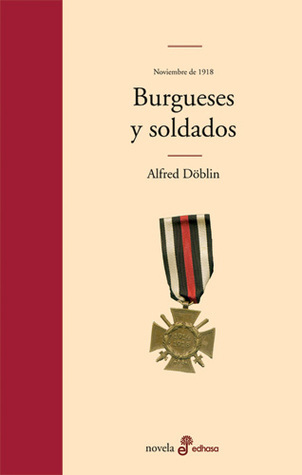
Burgueses y soldados
1938
El ciclo completo de la obra "Noviembre 1918" se estructura del siguiente modo: Primera parte, "Burgueses y soldados"; segunda parte, vol.I: "El pueblo traicionado", vol.II: "El regreso de las tropas del frente" y tercera parte: "Karl y Rosa". En esta primera entrega, buena parte de la tensión narrativa que genera Döblin reside en el acusado contraste entre los esfuerzos del líder espartaquista Karl Liebknecht por movilizar al proletariado contra el poder establecido y, por otra parte, los pactos que el dirigente de la asamblea de los representates del pueblo intenta establecer con los altos mandos militares. Un auténtico fresco del ambiente social y político de un episodio decisivo en la historia de Alemania, la revolución de 1918, que precipitó el cambio desde la monarquía del Reich alemán a la República de Weimar. Esta es la primera vez que se traduce esta obra de Alfred Döblin, autor de "Berlín Alexanderplatz", al español.
#2
A People Betrayed
1939
November 1918. The First World War is over, the battle is lost a and everywhere there is talk of revolution. Leaders of the German military have formed an uneasy alliance with the socialists who control the government and have proclaimed a new German republic, but throughout Berlin rival groups stage rallies and organize strikes. In A People Betrayed, the first volume of the epic November 1918: A German Revolution, Alfred Doblin takes us into the public and private dramas of these turbulent days, introducing us to a remarkable cast of fictional and historical characters, and bringing them to life in one of the great historical epics of the century.
#3
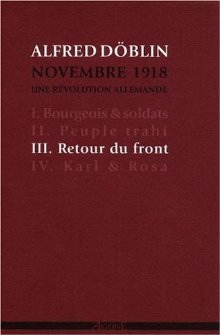
Retour du Front
1948
The return of the troops from the front forms a close unity with the previous installment of this cycle,
The People Betrayed
, and in them Döblin shows a Berlin where some inhabitants live in miserable conditions, while others know how to take advantage of the opportunities that war offers unscrupulous merchants, large and small swindlers, and also political opportunists. The shock represents for those who return from the war front the attempt to integrate into a society so changed compared to the one they left behind. These are small personal stories that form a splendid mosaic in which, in perspective, we can also see the negotiation and the immediate consequences of the Treaty of Versailles, which will soon completely change the situation throughout Europe.
#4
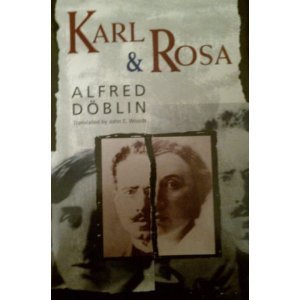
Karl and Rosa
1950
The second and third volumes of the November 1918 trilogy chronicle the end of Germany's 1918 revolution and the ensuing civil war that left the revolutionaries defeated on all sides.
Author
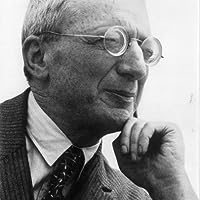
Alfred Döblin
Author · 17 books