


Margins
"On Strikes" book cover
"On Strikes"
1924
First Published
4.62
Average Rating
295
Number of Pages

.Written: Written at the end of 1899 Published: First published in 1924 in the magazine Proletarskaya Revolyutsiya, No. 8-9. Published according to a manuscript copied by an unknown hand. Source: Lenin Collected Works, Progress Publishers, 1964, Moscow, Volume 4, pages 310-319. Translated: Transcription\Markup: R. Cymbala and D. Walters Public Domain: Lenin Internet Archive (2003). You may freely copy, distribute, display and perform this work; as well as make derivative and commercial works. Please credit “Marxists Internet Archive” as your source. In recent years, workers’ strikes have become extremely frequent in Russia. There is no longer a single industrial gubernia in which there have not occurred several strikes. And in the big cities strikes never cease. It is understand able, therefore, that class-conscious workers and socialists should more and more frequently concern themselves with the question of the significance of strikes, of methods of conducting them, and of the tasks of socialists participating in them. We wish to attempt to outline some of our ideas on these questions. In our first article we plan to deal generally with the significance of strikes in the working-class movement; in the second we shall deal with anti-strike laws in Russia; and in the third, with the way strikes were and are conducted in Russia and with the attitude that class-conscious workers should adopt to them.
Avg Rating
4.62
Number of Ratings
13
5 STARS
69%
4 STARS
23%
3 STARS
8%
2 STARS
0%
1 STARS
0%
goodreads

Author

Vladimir Lenin
Vladimir Lenin
Author · 85 books

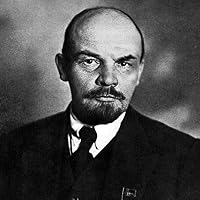
Lenin, Vladimir Ilyich Ulyanov (1870-1924) -one of the leaders of the Bolshevik party since its formation in 1903- led the Bolsheviks to power in October, 1917. Elected to the head of the Soviet government until 1922, when he retired due to ill health. Lenin, born in 1870, was committed to revolutionary struggle from an early age - his elder brother was hanged for the attempted assassination of Czar Alexander III. In 1891 Lenin passed his Law exam with high honors, whereupon he took to representing the poorest peasantry in Samara. After moving to St. Petersburg in 1893, Lenin's experience with the oppression of the peasantry in Russia, coupled with the revolutionary teachings of G V Plekhanov, guided Lenin to meet with revolutionary groups. In April 1895, his comrades helped send Lenin abroad to get up to speed with the revolutionary movement in Europe, and in particular, to meet the Emancipation of Labour Group, of which Plekhanov head. After five months abroad, traveling from Switzerland to France to Germany, working at libraries and newspapers to make his way, Lenin returned to Russia, carrying a brief case with a false bottom, full of Marxist literature. On returning to Russia, Lenin and Martov created the League for the Struggle for the Emancipation of the Working Class, uniting the Marxist circles in Petrograd at the time. The group supported strikes and union activity, distributed Marxist literature, and taught in workers education groups. In St. Petersburg Lenin begins a relationship with Nadezhda Krupskaya. In the night of December 8, 1895, Lenin and the members of the party are arrested; Lenin sentenced to 15 months in prison. By 1897, when the prison sentence expired, the autocracy appended an additional three year sentence, due to Lenin's continual writing and organising while in prison. Lenin is exiled to the village of Shushenskoye, in Siberia, where he becomes a leading member of the peasant community. Krupskaya is soon also sent into exile for revolutionary activities, and together they work on party organising, the monumental work: The Development of Capitalism in Russia, and the translating of Sidney and Beatrice Webb's Industrial Democracy. After his term of exile ends, Lenin emigrates to Münich, and is soon joined by Krupskaya. Lenin creates Iskra, in efforts to bring together the Russian Social Democratic Labour Party, which had been scattered after the police persecution of the first congress of the party in 1898. [...:] After leading the October Revolution, Lenin served as the first and only chairman of the R.S.F.S.R.. In 1919 Lenin founded the Communist International. In 1921 Lenin instituted the NEP. During 1922 Lenin suffered a series of strokes that prevented active work in government. While in his final year – late 1922 to 1923 – Lenin wrote his last articles where he outlined a programme to fight against the bureaucratization of the Commmunist Party and the Soviet state. Lenin died on January 21, 1924, as a result of multiple strokes.

548 Market St PMB 65688, San Francisco California 94104-5401 USA
© 2026 Paratext Inc. All rights reserved