Authors

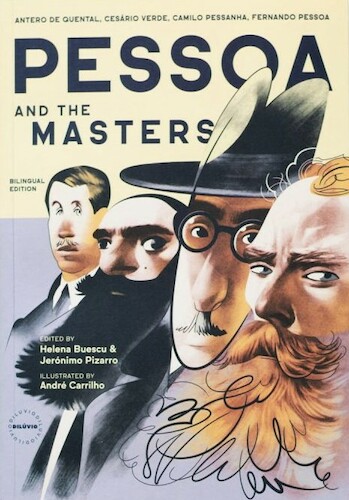
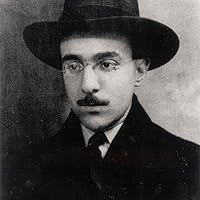
Fernando António Nogueira Pessoa was a poet and writer. It is sometimes said that the four greatest Portuguese poets of modern times are Fernando Pessoa. The statement is possible since Pessoa, whose name means ‘person’ in Portuguese, had three alter egos who wrote in styles completely different from his own. In fact Pessoa wrote under dozens of names, but Alberto Caeiro, Ricardo Reis and Álvaro de Campos were – their creator claimed – full-fledged individuals who wrote things that he himself would never or could never write. He dubbed them ‘heteronyms’ rather than pseudonyms, since they were not false names but “other names”, belonging to distinct literary personalities. Not only were their styles different; they thought differently, they had different religious and political views, different aesthetic sensibilities, different social temperaments. And each produced a large body of poetry. Álvaro de Campos and Ricardo Reis also signed dozens of pages of prose. The critic Harold Bloom referred to him in the book The Western Canon as the most representative poet of the twentieth century, along with Pablo Neruda.

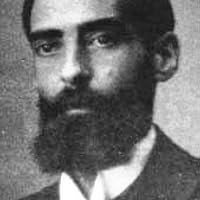
Antero Tarquínio de Quental or do Quental, old spelling Anthero, Portuguese poet, was born in Ponta Delgada on São Miguel Island, in the Azores, into one of the oldest families of the provincial captaincies on the island, his parents being Ana Guilhermina da Maia Quental, a devout Roman Catholic and Fernando de Quental, a veteran from Portuguese Liberal Wars (himself a son of a veteran from Napoleonic Wars and also a liberal enthusiast that befriended and found himself locked up with the great poet Manuel Maria Barbosa de Bocage for his political pursuits). He was also a descendant of Frei Bartolomeu de Quental, founder of the Congregation of the Oratory in Portugal. His mother raised him in such fashion that his upbringing would have an enduring impact in all his mystical reflections, even when they drifted apart from an assumed religious perspective. He soon started taking French lessons under António Feliciano de Castilho, a leading figure of Portuguese romantic poetry who at the time resided in Ponta Delgada and by the time he was 7 he was enrolled in Liceu Açoriano, a private school, and taking English lessons. In August 1852, he moved with his mother to the Portuguese Capital Lisbon, where he studied at Colégio do Pórtico, whose headmaster was his already known tutor Castilho. The institution soon closed doors, and Antero returns to Ponta Delgada in 1853. By 1855 he is again in Lisbon, and the next couple of years find him already in Coimbra where he graduates from high school at Colégio de S. Bento in 1857. In September of the next year he enrolls in the University of Coimbra and soon distinguished himself by unusual talent, as well as turbulence and eccentricity. He began to write poetry at an early age, chiefly, though not entirely, devoting himself to the sonnet. After the publication of one volume of verse, he entered with great warmth into the revolt of the young men which dethroned António Feliciano de Castilho, the chief living poet of the elder generation, from his place as dictator over modern Portuguese literature. He then travelled, engaged on his return in political and socialistic agitations, and found his way through a series of disappointments to the mild pessimism, a kind of Western Buddhism, which animates his latest poetical productions. His melancholy was increased by a spinal disease, which after several years of retirement from the world, eventually drove him to suicide in his native island. Antero stands at the head of modern Portuguese poetry after João de Deus. His principal defect is monotony: his own self is his solitary theme, and he seldom attempts any other form of composition than the sonnet. On the other hand, few poets who have chiefly devoted themselves to this form have produced so large a proportion of really exquisite work. The comparatively few pieces in which be either forgets his doubts and inward conflicts, or succeeds in giving them an objective form, are among the most beautiful in any literature. The purely introspective sonnets are less attractive, but equally finely wrought, interesting as psychological studies, and impressive from their sincerity. A healthy participation in public affairs might have saved him, but he seemed incapable of entering upon any course that did not lead to delusion and disappointment. As a prose writer Quental displayed high talents, though he wrote little. His most important prose work is the Considerações sobre a philosophia da historia literaria Portugueza, but he earned fame by his pamphlets on the Coimbra question, Bom senso e bom gosto, a letter to Castilho, and A dignidade das lettras e litteraturas officiaes. His friend Oliveira Martins edited the Sonnets (Oporto, 1886), supplying an introductory essay; and an interesting collection of studies on the poet by the leading Portuguese writers appeared in a volume entitled Anthero de Quental. In Memoriam (Oporto, 1896). The sonnets have been turned into most European languages

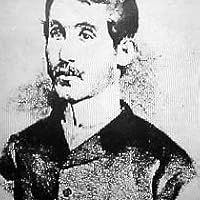
Cesário Verde (February 25, 1855 – July 19, 1886) was a 19th-century Portuguese poet. His work, while mostly ignored during his lifetime and not well known outside of the country’s borders even today, is generally considered to be amongst the most important in Portuguese poetry and is widely taught in schools. This is partly due to his being championed by many other authors after his death, notably Fernando Pessoa. Cesário Verde is frequently hailed as both one of Portugal’s finest urban poets and one of the country’s greatest describers of the countryside. Thus, Verde’s poems (always written in the alexandrine structure) are mostly split into “city poems” and “countryside poems” (the few that escape these two categories dealing with love, often scorned.) Cesário Verde’s city poems are often described as bohemian, decadent and socially aware. He is hailed as Portugal’s first great realist poet, frequently dealing with scenes of poverty, disease and moral decay. His poems also frequently deal with spleen and ennui. In “O Sentimento Dum Ocidental” (“The Feelings Of A Westerner”), Verde captures the atmosphere of decadence then growing in Portuguese society, comparing the past discoveries and expeditions of Portugueses sailors, as well as the works of national poet Luís de Camões, to the present. He also expresses a longing to experience a larger world beyond the city, pining for “Madrid, Paris, Berlim, S. Petersburgo, o mundo!” (“Madrid, Paris, Berlin, St. Petersburg, the world!”) While the city is corrupt and decaying, the countryside in Verde’s poetry is described as lively, fertile and full of beauty. Even the growing industrialization of agriculture isn’t seen as a worrying factor [...] The autobiographical poem “Nós” gives an idyllic description of Verde’s youth living on the farm – latter poems show the countryside as the peaceful setting for picnics, and as an opportunity for long walks with female companionship. Whilst in his “city” poems Verde describes spleen and disease, in his descriptions of the countryside the protagonists are often strong, happy and robust. In his poetry, Cesário Verde references Balzac, Baudelaire and Herbert Spencer. His letters also contain quotes from Victor Hugo, Flaubert, Taine and Quinet. On a national level, the authors referenced are Luís de Camões and João de Deus. Although he was never very celebrated during his lifetime, Verde did socialize with many of the country’s foremost literary figures (some of these meetings may be attributed to Verde’s republican sympathies, then highly in vogue amongst the country’s intellectuals.) Fialho de Almeida is said to have greatly admired him, and other acquaintances include Guerra Junqueiro, Ramalho Ortigão, Gomes Leal, João de Deus, Abel Botelho and the painter Rafael Bordalo Pinheiro. After his death, Verde’s reputation has steadily grown. He was particularly embraced by Portuguese modernists such as Mário de Sá-Carneiro and Fernando Pessoa (whose heteronyms Álvaro de Campos and Alberto Caeiro praise Verde.) More modern admirers include Eugénio de Andrade and Adolfo Casais Monteiro During his lifetime, Cesário Verde published around forty poems in various papers. After his death, his friend Silva Pinto published “The Book Of Cesário Verde”, collecting his poems. The first edition was published in April 1887 – two hundred copies were printed, to be dispensed as gifts only. The compilation was only made available commercially in 1901. More recent editions have respected the order in which the poems were first compiled, but added others that weren’t included in the first selection. The book now includes Verde’s entire poetic oeuvre. Source: http://en.wikipedia.org/wiki/Ces%C3%A...