Margins


548 Market St PMB 65688, San Francisco California 94104-5401 USA
© 2026 Paratext Inc. All rights reserved

British playwright and lyricist Sir William Schwenck Gilbert wrote a series of comic operas, including Her Majesty's Ship Pinafore (1878) and The Pirates of Penzance (1879), with composer Sir Arthur Sullivan. This English dramatist, librettist, poet, and illustrator in collaboration with this composer produced fourteen comic operas, which include The Mikado , one of the most frequently performed works in the history of musical theatre. Opera companies, repertory companies, schools and community theatre groups throughout and beyond the English-speaking world continue to perform regularly these operas as well as most of their other Savoy operas. From these works, lines, such as "short, sharp shock", "What, never? Well, hardly ever!", and "Let the punishment fit the crime," form common phrases of the English language. Gilbert also wrote the Bab Ballads , an extensive collection of light verse, which his own comical drawings accompany. His creative output included more than 75 plays and libretti, numerous stories, poems, lyrics and various other comic and serious pieces. His plays and realistic style of stage direction inspired other dramatists, including Oscar Wilde and George Bernard Shaw. According to The Cambridge History of English and American Literature , the "lyrical facility" of Gilbert "and his mastery of metre raised the poetical quality of comic opera to a position that it had never reached before and has not reached since."
2026
Containing Comedy and Tragedy; Foggerty's Fairy; Rosencrantz and Guildenstern; Patience; Princess Ida; The Mikado; ... Mountebanks; Utopia Limited
2018
a Sermon Preach'd Before the University of Oxford, at St. Mary's, on Sunday, November 27, 1757. by Thomas Griffith
2016
2013
The Mysterious Stranger & Other Stories
2010
Containing Broken Hearts, Engaged, Sweethearts, Dan'l Druce, Gretchen, Tom Cobb, the Sorcerer, H. M.S. Pinafore, the Pirates of Penzance
2010
Stories of Courtship
2006
1996
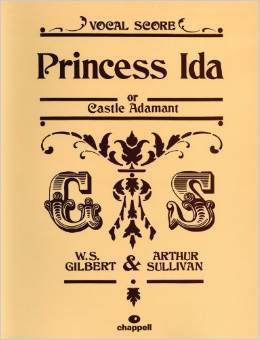
Trial By Jury; Sorcerer; H.M.S. Pinafore; Pirates Of Penzance; Patience; Iolanthe; Princess Ida
1957
1926
1896
1893
a tragic episode in three tableaux
1891
1889
1888
1885
1884
1884
1882
1881
1879
1878
1877
1877
1875
1873
1871