Margins




548 Market St PMB 65688, San Francisco California 94104-5401 USA
© 2026 Paratext Inc. All rights reserved

Sir John (Jack) Rankine Goody (born 27 July 1919) is a British social anthropologist. He has been a prominent teacher at Cambridge University, he was elected Fellow of the British Academy in 1976,[1] and he is an associate of the US National Academy of Sciences. Among his main publications are Death, property and the ancestors (1962), The myth of the Bagre (1972) and The domestication of the savage mind. Jack Goody explained social structure and social change primarily in terms of three major factors. The first was the development of intensive forms of agriculture that allowed for the accumulation of surplus – surplus explained many aspects of cultural practice from marriage to funerals as well as the great divide between African and Eurasian societies. Second, he explained social change in terms of urbanization and growth of bureaucratic institutions that modified or overrode traditional forms of social organization, such as family or tribe, identifying civilization as “the culture of cities”. And third, he attached great weight to the technologies of communication as instruments of psychological and social change. He associated the beginnings of writing with the task of managing surplus and, in an important paper with Ian Watt (Goody and Watt, 1963), he advanced the argument that the rise of science and philosophy in classical Greece depended importantly on their invention of an efficient writing system, the alphabet. Because these factors could be applied to either to any contemporary social system or to systematic changes over time, his work is equally relevant to many disciplines.
The Great Debate
2004
A Study in Comparative Sociology
1982

A Cultural History of East and West
1999
2003
1975
2006

A Comparative Study of the Domestic Domain
1976
The One or the Many?
2010

1990

1983
1977
1996
2009

An Historico-Anthropological Essay
2000
The rise of Social Anthropology in Britain and Africa 1918–1970
1995
1987
1986
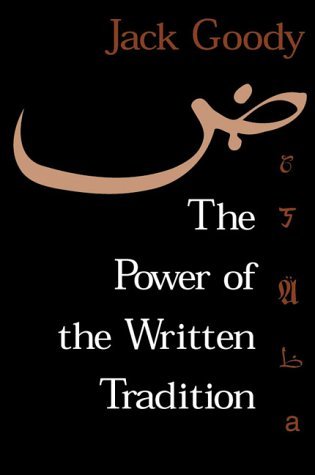
2000
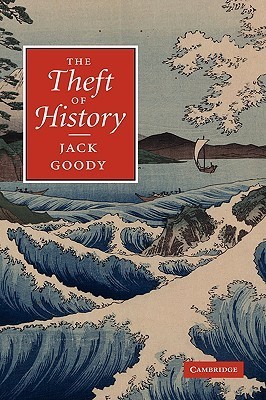
2002