


Who doesn't love a bit of surprise, danger, eerie atmosphere, and just the right hint of romance! So, here's presenting to you our best ever gothic collection, with all the well known classics, all the hidden gems, and lots of surprises for all the fans of chills, darkness and mystery out there. Also, our biggest-ever collection is meticulously edited and formatted for your eReader with a functional and detailed table of contents: The Adventures of Ferdinand Count Fathom The Castle of Otranto The Old English Baron Vathek The Ghost-Seer The Castle of Wolfenbach Caleb Williams The Mysteries of Udolpho The Italian A Sicilian Romance The Romance of the Forest The Monk The Orphan of the Rhine The Rime of the Ancient Mariner Christabel Zastrozzi St. Irvyne Manfred Northanger Abbey Frankenstein... Isabella, or the Pot of Basil La Belle Dame Sans Merci The Raven The Tell-Tale Heart The Fall of the House of Usher The Cask of Amontillado... The Vampyre... The Private Memoirs and Confessions of a Justified Sinner Porphyria's Lover St, John's Eve The Viy... Jane Eyre Wuthering Heights Sweeney Todd, the Demon Barber of Fleet Street The House of the Seven Gables... The Woman in White Goblin Market The Headless Horseman Strange Case of Dr Jekyll and Mr Hyde Carmilla Uncle Silas The Man-Wolf The Great Amherst Mystery The Hound of the Baskervilles... The Picture of Dorian Gray The Horla The Forsaken Inn The Yellow Wallpaper The Island of Doctor Moreau The Invisible Man The Beetle The Turn of the Screw... Dracula… The Necromancers The House on the Borderland The Phantom of the Opera… Wolverden Tower...
Authors
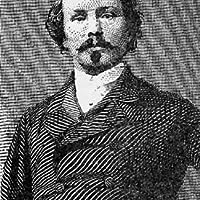
James Malcolm Rymer was a British nineteenth century writer of penny dreadfuls, and is the probable author of Varney the Vampire, often attributed to fellow writer Thomas Peckett Prest, and co-author (with Prest) of The String of Pearls, in which the notorious villain Sweeney Todd makes his literary debut. Information about Rymer is sketchy. In the London Directory for 1841 he is listed as a civil engineer, living at 42 Burton Street, and the British Museum catalogue mentions him in 1842 as editing the Queen's Magazine. Between 1842 to the 1867 he wrote up to 115 popular novels for the English bookseller and publisher, Edward Lloyd, including the best-sellers Ada the Betrayed, Varney the Vampyre and The String of Pearls. Rymer's novels appeared in England under his own name as well as anagrammatic pseudonyms such as Malcolm J. Errym and Malcolm J. Merry. He died on 11 August 1884 and is buried in Kensal Green cemetery, west London.

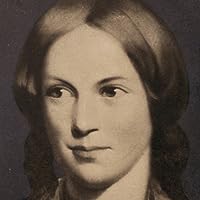
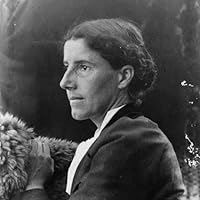
Charlotte Brontë was an English novelist, the eldest out of the three famous Brontë sisters whose novels have become standards of English literature. See also Emily Brontë and Anne Brontë. Charlotte Brontë was born in Thornton, Yorkshire, England, the third of six children, to Patrick Brontë (formerly "Patrick Brunty"), an Irish Anglican clergyman, and his wife, Maria Branwell. In April 1820 the family moved a few miles to Haworth, a remote town on the Yorkshire moors, where Patrick had been appointed Perpetual Curate. This is where the Brontë children would spend most of their lives. Maria Branwell Brontë died from what was thought to be cancer on 15 September 1821, leaving five daughters and a son to the care of her spinster sister Elizabeth Branwell, who moved to Yorkshire to help the family. In August 1824 Charlotte, along with her sisters Emily, Maria, and Elizabeth, was sent to the Clergy Daughters' School at Cowan Bridge in Lancashire, a new school for the daughters of poor clergyman (which she would describe as Lowood School in Jane Eyre). The school was a horrific experience for the girls and conditions were appalling. They were regularly deprived of food, beaten by teachers and humiliated for the slightest error. The school was unheated and the pupils slept two to a bed for warmth. Seven pupils died in a typhus epidemic that swept the school and all four of the Brontë girls became very ill - Maria and Elizabeth dying of tuberculosis in 1825. Her experiences at the school deeply affected Brontë - her health never recovered and she immortalised the cruel and brutal treatment in her novel, Jane Eyre. Following the tragedy, their father withdrew his daughters from the school. At home in Haworth Parsonage, Charlotte and the other surviving children—Branwell, Emily, and Anne—continued their ad-hoc education. In 1826 her father returned home with a box of toy soldiers for Branwell. They would prove the catalyst for the sisters' extraordinary creative development as they immediately set to creating lives and characters for the soldiers, inventing a world for them which the siblings called 'Angria'. The siblings became addicted to writing, creating stories, poetry and plays. Brontë later said that the reason for this burst of creativity was that: 'We were wholly dependent on ourselves and each other, on books and study, for the enjoyments and occupations of life. The highest stimulus, as well as the liveliest pleasure we had known from childhood upwards, lay in attempts at literary composition.' After her father began to suffer from a lung disorder, Charlotte was again sent to school to complete her education at Roe Head school in Mirfield from 1831 to 1832, where she met her lifelong friends and correspondents, Ellen Nussey and Mary Taylor. During this period (1833), she wrote her novella The Green Dwarf under the name of Wellesley. The school was extremely small with only ten pupils meaning the top floor was completely unused and believed to be supposedly haunted by the ghost of a young lady dressed in silk. This story fascinated Brontë and inspired the figure of Mrs Rochester in Jane Eyre. Brontë left the school after a few years, however she swiftly returned in 1835 to take up a position as a teacher, and used her wages to pay for Emily and Anne to be taught at the school. Teaching did not appeal to Brontë and in 1838 she left Roe Head to become a governess to the Sidgewick family—partly from a sense of adventure and a desire to see the world, and partly from financial necessity. Charlotte became pregnant soon after her wedding, but her health declined rapidly and, according to biographer Elizabeth Gaskell, she was attacked by "sensations of perpetual nausea and ever-recurring faintness." She died, with her unborn child, on 31 March 1855.

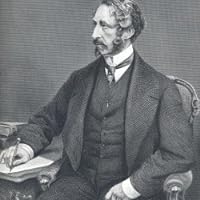
Edward George Earle Lytton Bulwer-Lytton, 1st Baron Lytton PC, was an English novelist, poet, playwright, and politician. Lord Lytton was a florid, popular writer of his day, who coined such phrases as "the great unwashed", "pursuit of the almighty dollar", "the pen is mightier than the sword", and the infamous incipit "It was a dark and stormy night." He was the youngest son of General William Earle Bulwer of Heydon Hall and Wood Dalling, Norfolk and Elizabeth Barbara Lytton, daughter of Richard Warburton Lytton of Knebworth, Hertfordshire. He had two brothers, William Earle Lytton Bulwer (1799–1877) and Henry, afterwards Lord Dalling and Bulwer. Lord Lytton's original surname was Bulwer, the names 'Earle' and 'Lytton' were middle names. On 20 February 1844 he assumed the name and arms of Lytton by royal licence and his surname then became 'Bulwer-Lytton'. His widowed mother had done the same in 1811. His brothers were always simply surnamed 'Bulwer'.

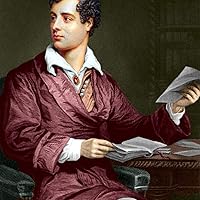
George Gordon Byron (invariably known as Lord Byron), later Noel, 6th Baron Byron of Rochdale FRS was a British poet and a leading figure in Romanticism. Amongst Byron's best-known works are the brief poems She Walks in Beauty, When We Two Parted, and So, we'll go no more a roving, in addition to the narrative poems Childe Harold's Pilgrimage and Don Juan. He is regarded as one of the greatest British poets and remains widely read and influential, both in the English-speaking world and beyond. Byron's notabilty rests not only on his writings but also on his life, which featured upper-class living, numerous love affairs, debts, and separation. He was notably described by Lady Caroline Lamb as "mad, bad, and dangerous to know". Byron served as a regional leader of Italy's revolutionary organization, the Carbonari, in its struggle against Austria. He later travelled to fight against the Ottoman Empire in the Greek War of Independence, for which Greeks revere him as a national hero. He died from a fever contracted while in Messolonghi in Greece.

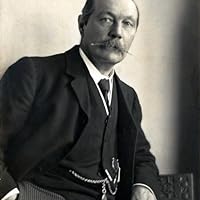
Sir Arthur Ignatius Conan Doyle was born the third of ten siblings on 22 May 1859 in Edinburgh, Scotland. His father, Charles Altamont Doyle, a talented illustrator, was born in England of Irish descent, and his mother, born Mary Foley, was Irish. They were married in 1855. Although he is now referred to as "Conan Doyle", the origin of this compound surname (if that is how he meant it to be understood) is uncertain. His baptism record in the registry of St Mary's Cathedral in Edinburgh gives 'Arthur Ignatius Conan' as his Christian name, and simply 'Doyle' as his surname. It also names Michael Conan as his godfather. At the age of nine Conan Doyle was sent to the Roman Catholic Jesuit preparatory school, Hodder Place, Stonyhurst. He then went on to Stonyhurst College, leaving in 1875. From 1876 to 1881 he studied medicine at the University of Edinburgh. This required that he provide periodic medical assistance in the towns of Aston (now a district of Birmingham) and Sheffield. While studying, Conan Doyle began writing short stories. His first published story appeared in "Chambers' Edinburgh Journal" before he was 20. Following his graduation, he was employed as a ship's doctor on the SS Mayumba during a voyage to the West African coast. He completed his doctorate on the subject of tabes dorsalis in 1885. In 1885 Conan Doyle married Louisa (or Louise) Hawkins, known as "Touie". She suffered from tuberculosis and died on 4 July 1906. The following year he married Jean Elizabeth Leckie, whom he had first met and fallen in love with in 1897. Due to his sense of loyalty he had maintained a purely platonic relationship with Jean while his first wife was alive. Jean died in London on 27 June 1940. Conan Doyle fathered five children. Two with his first wife—Mary Louise (28 January 1889 – 12 June 1976), and Arthur Alleyne Kingsley, known as Kingsley (15 November 1892 – 28 October 1918). With his second wife he had three children—Denis Percy Stewart (17 March 1909 – 9 March 1955), second husband in 1936 of Georgian Princess Nina Mdivani (circa 1910 – 19 February 1987; former sister-in-law of Barbara Hutton); Adrian Malcolm (19 November 1910–3 June 1970) and Jean Lena Annette (21 December 1912–18 November 1997). Conan Doyle was found clutching his chest in the hall of Windlesham, his house in Crowborough, East Sussex, on 7 July 1930. He had died of a heart attack at age 71. His last words were directed toward his wife: "You are wonderful." The epitaph on his gravestone in the churchyard at Minstead in the New Forest, Hampshire, reads: STEEL TRUE BLADE STRAIGHT ARTHUR CONAN DOYLE KNIGHT PATRIOT, PHYSICIAN & MAN OF LETTERS Conan Doyle's house, Undershaw, located in Hindhead, south of London, where he had lived for a decade, had been a hotel and restaurant between 1924 and 2004. It now stands empty while conservationists and Conan Doyle fans fight to preserve it. A statue honours Conan Doyle at Crowborough Cross in Crowborough, where Conan Doyle lived for 23 years. There is also a statue of Sherlock Holmes in Picardy Place, Edinburgh, close to the house where Conan Doyle was born. Series: * Sherlock Holmes

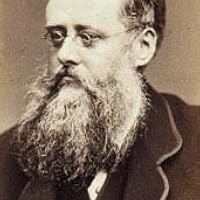
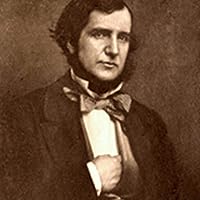
A close friend of Charles Dickens from their meeting in March 1851 until Dickens' death in June 1870, William Wilkie Collins was one of the best known, best loved, and, for a time, best paid of Victorian fiction writers. But after his death, his reputation declined as Dickens' bloomed. Now, Collins is being given more critical and popular attention than he has received for 50 years. Most of his books are in print, and all are now in e-text. He is studied widely; new film, television, and radio versions of some of his books have been made; and all of his letters have been published. However, there is still much to be discovered about this superstar of Victorian fiction. Born in Marylebone, London in 1824, Collins' family enrolled him at the Maida Hill Academy in 1835, but then took him to France and Italy with them between 1836 and 1838. Returning to England, Collins attended Cole's boarding school, and completed his education in 1841, after which he was apprenticed to the tea merchants Antrobus & Co. in the Strand. In 1846, Collins became a law student at Lincoln's Inn, and was called to the bar in 1851, although he never practised. It was in 1848, a year after the death of his father, that he published his first book, 'The Memoirs of the Life of William Collins, Esq., R.A'., to good reviews. The 1860s saw Collins' creative high-point, and it was during this decade that he achieved fame and critical acclaim, with his four major novels, 'The Woman in White' (1860), 'No Name' (1862), 'Armadale' (1866) and 'The Moonstone' (1868). 'The Moonstone', is seen by many as the first true detective novel T. S. Eliot called it "the first, the longest, and the best of modern English detective novels ..." in a genre invented by Collins and not by Poe.

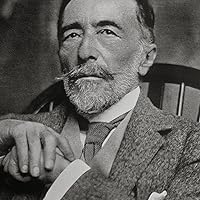
Joseph Conrad (born Józef Teodor Konrad Korzeniowski ) was a Polish-born English novelist who today is most famous for Heart of Darkness, his fictionalized account of Colonial Africa. Conrad left his native Poland in his middle teens to avoid conscription into the Russian Army. He joined the French Merchant Marine and briefly employed himself as a wartime gunrunner. He then began to work aboard British ships, learning English from his shipmates. He was made a Master Mariner, and served more than sixteen years before an event inspired him to try his hand at writing. He was hired to take a steamship into Africa, and according to Conrad, the experience of seeing firsthand the horrors of colonial rule left him a changed man. Joseph Conrad settled in England in 1894, the year before he published his first novel. He was deeply interested in a small number of writers both in French and English whose work he studied carefully. This was useful when, because a need to come to terms with his experience, lead him to write Heart of Darkness, in 1899, which was followed by other fictionalized explorations of his life. He has been lauded as one of the most powerful, insightful, and disturbing novelists in the English canon despite coming to English later in life, which allowed him to combine it with the sensibilities of French, Russian, and Polish literature.


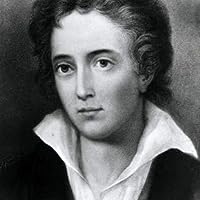
Percy Bysshe Shelley was one of the major English Romantic poets and is widely considered to be among the finest lyric poets of the English language. He is perhaps most famous for such anthology pieces as Ozymandias, Ode to the West Wind, To a Skylark, and The Masque of Anarchy. However, his major works were long visionary poems including Alastor, Adonais, The Revolt of Islam, Prometheus Unbound and the unfinished The Triumph of Life. Shelley's unconventional life and uncompromising idealism, combined with his strong skeptical voice, made him a authoritative and much denigrated figure during his life. He became the idol of the next two or three generations of poets, including the major Victorian and Pre-Raphaelite poets Robert Browning, Alfred, Lord Tennyson, Dante Gabriel Rossetti, Algernon Charles Swinburne, as well as William Butler Yeats and poets in other languages such as Jibanananda Das and Subramanya Bharathy. He was also admired by Karl Marx, Henry Stephens Salt, and Bertrand Russell. Famous for his association with his contemporaries John Keats and Lord Byron, he was also married to novelist Mary Shelley.


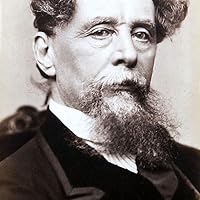
Charles John Huffam Dickens (1812-1870) was a writer and social critic who created some of the world's best-known fictional characters and is regarded as the greatest novelist of the Victorian era. His works enjoyed unprecedented popularity during his lifetime, and by the twentieth century critics and scholars had recognised him as a literary genius. His novels and short stories enjoy lasting popularity. Dickens left school to work in a factory when his father was incarcerated in a debtors' prison. Despite his lack of formal education, he edited a weekly journal for 20 years, wrote 15 novels, five novellas, hundreds of short stories and non-fiction articles, lectured and performed extensively, was an indefatigable letter writer, and campaigned vigorously for children's rights, education, and other social reforms. Dickens was regarded as the literary colossus of his age. His 1843 novella, A Christmas Carol, remains popular and continues to inspire adaptations in every artistic genre. Oliver Twist and Great Expectations are also frequently adapted, and, like many of his novels, evoke images of early Victorian London. His 1859 novel, A Tale of Two Cities, set in London and Paris, is his best-known work of historical fiction. Dickens' creative genius has been praised by fellow writers—from Leo Tolstoy to George Orwell and G. K. Chesterton—for its realism, comedy, prose style, unique characterisations, and social criticism. On the other hand, Oscar Wilde, Henry James, and Virginia Woolf complained of a lack of psychological depth, loose writing, and a vein of saccharine sentimentalism. The term Dickensian is used to describe something that is reminiscent of Dickens and his writings, such as poor social conditions or comically repulsive characters. On 8 June 1870, Dickens suffered another stroke at his home after a full day's work on Edwin Drood. He never regained consciousness, and the next day he died at Gad's Hill Place. Contrary to his wish to be buried at Rochester Cathedral "in an inexpensive, unostentatious, and strictly private manner," he was laid to rest in the Poets' Corner of Westminster Abbey. A printed epitaph circulated at the time of the funeral reads: "To the Memory of Charles Dickens (England's most popular author) who died at his residence, Higham, near Rochester, Kent, 9 June 1870, aged 58 years. He was a sympathiser with the poor, the suffering, and the oppressed; and by his death, one of England's greatest writers is lost to the world." His last words were: "On the ground", in response to his sister-in-law Georgina's request that he lie down. (from Wikipedia)

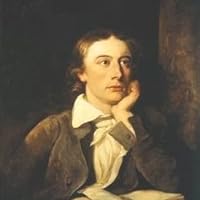
Rich melodic works in classical imagery of British poet John Keats include " The Eve of Saint Agnes ," " Ode on a Grecian Urn ," and " To Autumn ," all in 1819. Work of the principal of the Romantic movement of England received constant critical attacks from the periodicals of the day during his short life. He nevertheless posthumously immensely influenced poets, such as Alfred Tennyson. Elaborate word choice and sensual imagery characterize poetry, including a series of odes, masterpieces of Keats among the most popular poems in English literature. Most celebrated letters of Keats expound on his aesthetic theory of "negative capability." Wikipedia page of the author


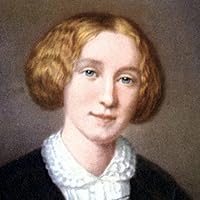
Mary Ann Evans, known by her pen name George Eliot, was an English novelist, poet, journalist, translator and one of the leading writers of the Victorian era. She was born in 1819 at a farmstead in Nuneaton, Warwickshire, England, where her father was estate manager. Mary Ann, the youngest child and a favorite of her father's, received a good education for a young woman of her day. Influenced by a favorite governess, she became a religious evangelical as an adolescent. Her first published work was a religious poem. Through a family friend, she was exposed to Charles Hennell's "An Inquiry into the Origins of Christianity". Unable to believe, she conscientiously gave up religion and stopped attending church. Her father shunned her, sending the broken-hearted young dependent to live with a sister until she promised to reexamine her feelings. Her intellectual views did not, however, change. She translated Das Leben Jesu, a monumental task, without signing her name to the 1846 work. After her father's death in 1849, Mary Ann traveled, then accepted an unpaid position with The Westminster Review. Despite a heavy workload, she translated The Essence of Christianity, the only book ever published under her real name. That year, the shy, respectable writer scandalized British society by sending notices to friends announcing she had entered a free "union" with George Henry Lewes, editor of The Leader, who was unable to divorce his first wife. They lived harmoniously together for the next 24 years, but suffered social ostracism and financial hardship. She became salaried and began writing essays and reviews for The Westminster Review. Renaming herself "Marian" in private life and adopting the penname "George Eliot," she began her impressive fiction career, including: Adam Bede (1859), The Mill on the Floss (1860), Silas Marner (1861), Romola (1863), and Middlemarch (1871). Themes included her humanist vision and strong heroines. Her poem, "O May I Join the Choir Invisible" expressed her views about non supernatural immortality: "O may I join the choir invisible/ Of those immortal dead who live again/ In minds made better by their presence. . ." D. 1880. Her 1872 work Middlemarch has been described by Martin Amis and Julian Barnes as the greatest novel in the English language. More: http://en.wikipedia.org/wiki/George\_E... http://www.bbc.co.uk/history/historic... http://www.britannica.com/EBchecked/t... http://www.victorianweb.org/victorian... http://www.biography.com/people/georg... http://www.pbs.org/wgbh/masterpiece/d...

Henry James, OM (1843-1916), son of theologian Henry James Sr., brother of the philosopher and psychologist William James and diarist Alice James, was an American-born author, one of the founders and leaders of a school of realism in fiction. He spent much of his life in England and became a British subject shortly before his death. He is primarily known for a series of major novels in which he portrayed the encounter of America with Europe. His plots centered on personal relationships, the proper exercise of power in such relationships, and other moral questions. His method of writing from the point of view of a character within a tale allowed him to explore the phenomena of consciousness and perception, and his style in later works has been compared to impressionist painting. James insisted that writers in Great Britain and America should be allowed the greatest freedom possible in presenting their view of the world, as French authors were. His imaginative use of point of view, interior monologue and unreliable narrators in his own novels and tales brought a new depth and interest to realistic fiction, and foreshadowed the modernist work of the twentieth century. An extraordinarily productive writer, in addition to his voluminous works of fiction he published articles and books of travel writing, biography, autobiography, and criticism,and wrote plays, some of which were performed during his lifetime with moderate success. His theatrical work is thought to have profoundly influenced his later novels and tales.

Guy Newell Boothby was born in Adelaide, South Australia, the son of Thomas Wilde Boothby, a Member of the South Australian House of Assembly. At six years of age he travelled with his mother to England and was educated at Lord Weymouth's Grammar School, Salisbury and at Christ's Hospital, London between 1874 and 1883. When his education was over he returned to Australia where he eventually became secretary to the Mayor of Adelaide, Lewis Cohen. He was dissatisfied with his prospects in Adelaide and consequently he moved to Brisbane where he hoped his prospects would be better. In the meantime he wrote a series of comic operas and plays, all of which were relatively unsuccessful. He was of a roving disposition and at age 24 he travelled across Australia from north to south and later he travelled extensively in the East. By 1894 he had married Rose Alice Bristowe and he and his wife moved to England in that year, which was notable for the publication of his first book, 'On the Wallaby, or, Through the East and Across Australia', an account of his and his brother's travels in Australia. He was given advice and encouragement in his writing by none other than Rudyard Kipling and the year 1895 saw the publication of three novels, the most significant of which was 'A Bid for Fortune: or, Dr Nikola's Vendetta'. This introduced probably his best known character, Dr Nikola, a ruthless, unscrupulous figure, with his ubiquitous large cat, who was to feature in five of his novels over the ensuing years. The book was an instant success and brought him a certain amount of fame. Dr Nikola had first appeared in serial form in the Windosr Magazine. Over the next 10 years he was to write another 50 books and a further five were published posthumously, the last of which was 'In the Power of the Sultan' (1908). He was so prodigious that the story circulated that he spoke his tales into a phonograph, from which they were later transcribed by secretaries. He is perhaps remembered also for introducing one of the early gentlemen crooks of literature when he featured Simon Carne in 'A Prince of Swindlers' in 1897. Carne had originally appeared in Pearson's Magazine and as a gentleman crook he pre-dated another of his kind in A J Raffles by two years. Boothby's novels were often set in Australia (not surprisingly) and were classed as 'fast-paced thrillers' although some felt that although exciting in plot they were 'hastily and carelessly written'. In addition they were said to have been enjoyed by those who 'care for frank sensationalism carried to its furtherest limits'. Despite these comments his books were extremely popular and made him one of the most successful novelists of his day. Boothby, who was also a successful breeder of prize dogs, died suddenly of pneumonia at his home, Winsley Lodge, Watkin Road, Bournemouth in 1905. He left a widow and three children. Gerry Wolstenholme February 2012

Edward Frederic "E. F." Benson was an English novelist, biographer, memoirist, archaeologist and short story writer. E. F. Benson was the younger brother of A.C. Benson, who wrote the words to "Land of Hope and Glory", Robert Hugh Benson, author of several novels and Roman Catholic apologetic works, and Margaret Benson, an author and amateur Egyptologist. Benson died during 1940 of throat cancer at the University College Hospital, London. He is buried in the cemetery at Rye, East Sussex. Last paragraph from Wikipedia


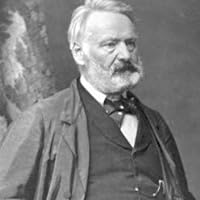
After Napoleon III seized power in 1851, French writer Victor Marie Hugo went into exile and in 1870 returned to France; his novels include The Hunchback of Notre Dame (1831) and Les Misérables (1862). This poet, playwright, novelist, dramatist, essayist, visual artist, statesman, and perhaps the most influential, important exponent of the Romantic movement in France, campaigned for human rights. People in France regard him as one of greatest poets of that country and know him better abroad.

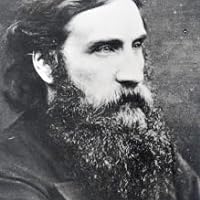
George MacDonald was a Scottish author, poet, and Christian minister. He was educated at Aberdeen University and after a short and stormy career as a minister at Arundel, where his unorthodox views led to his dismissal, he turned to fiction as a means of earning a living. He wrote over 50 books. Known particularly for his poignant fairy tales and fantasy novels, MacDonald inspired many authors, such as G.K. Chesterton, W. H. Auden, J.R.R. Tolkien, C. S. Lewis, and Madeleine L'Engle. Lewis wrote that he regarded MacDonald as his "master": "Picking up a copy of Phantastes one day at a train-station bookstall, I began to read. A few hours later," said Lewis, "I knew that I had crossed a great frontier." G. K. Chesterton cited The Princess and the Goblin as a book that had "made a difference to my whole existence." Elizabeth Yates wrote of Sir Gibbie, "It moved me the way books did when, as a child, the great gates of literature began to open and first encounters with noble thoughts and utterances were unspeakably thrilling." Even Mark Twain, who initially disliked MacDonald, became friends with him, and there is some evidence that Twain was influenced by MacDonald. For more information, please see http://en.wikipedia.org/wiki/George\_M...


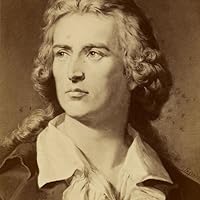
People best know long didactic poems and historical plays, such as Don Carlos (1787) and William Tell (1804), of leading romanticist German poet, dramatist, and historian Johann Christoph Friedrich von Schiller. This philosopher and dramatist struck up a productive if complicated friendship with already famous and influential Johann Wolfgang von Goethe during the last eighteen years of his life and encouraged Goethe to finish works that he left merely as sketches; they greatly discussed issues concerning aesthetics and thus gave way to a period, now referred to as classicism of Weimar. They also worked together on Die Xenien ( The Xenies ), a collection of short but harsh satires that verbally attacked perceived enemies of their aesthetic agenda. https://en.wikipedia.org/wiki/Friedri...

Charlotte Perkins Gilman, also known as Charlotte Perkins Stetson, was a prominent American sociologist, novelist, writer of short stories, poetry, and nonfiction, and a lecturer for social reform. She was a utopian feminist during a time when her accomplishments were exceptional for women, and she served as a role model for future generations of feminists because of her unorthodox concepts and lifestyle. Her best remembered work today is her semi-autobiographical short story, "The Yellow Wallpaper", which she wrote after a severe bout of post-partum depression. She was the daughter of Frederic B. Perkins.

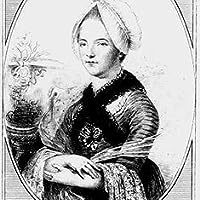
Reeve was born in Ipswich, England, one of the eight children of Reverend Willian Reeve, M.A., Rector of Freston and of Kreson in Suffolk, and perpetual curate of St Nicholas. Her mother's maiden name was Smithies, daughter of a Smithies, a goldsmith and jeweller to King George I. In a letter to one of her friends Reeve said the following of her father and her early life: My father was an old Whig; from him I have learned all that I know; he was my oracle; he used to make me read the Parliamentary debates, while he smoked his pipe after supper. I gaped and yawned over them at the time, but, unawares to myself, they fixed my principles once and for all. He made me read Rapin's History of England; the information it gave made amends for its dryness. I read Cato's Letters by Trenchard and Gordon; I read the Greek and Roman histories, and Plutarch's Lives: all these at an age when few people of either sex can read their names. After the death of her father, she lived with her mother and sisters in Colchester. It was here that she first became an author, publishing a translation of a work by Barclay under the title of The Phoenix (1772). She was the author of several novels, of which only one is remembered: The Champion of Virtue, later known as The Old English Baron (1777), written in imitation of, or rivalry with, the Castle of Otranto by Horace Walpole, 4th Earl of Orford, with which it has often been printed. The first edition under the title of The Old English Baron was dedicated to the daughter of Samuel Richardson, who is said to have helped Reeve revise and correct the novel. Her novel noticeably influenced Mary Shelley's Frankenstein. She also wrote the epistolatory novel The School for Widows (1791). Her innovative history of prose fiction, The Progress of Romance (1785), can be regarded generally as a precursor to modern histories of the novel and specifically as upholding the tradition of female literary history heralded by Elizabeth Rowe (1674–1737) and Susannah Dobson, d. 1795. One of the stories in this work, "The History of Charoba, Queen of Egypt", was the inspiration for Walter Savage Landor's first major work Gebir. Reeve led a retired life, leaving very little biographical material. She died at Ipswitch, and was buried by her own direction in the churchyard of St. Stephens, next to her friend the Reverend Derby.


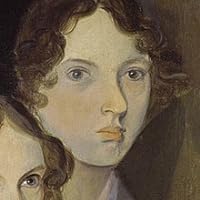
Emily Jane Brontë was an English novelist and poet, now best remembered for her only novel Wuthering Heights, a classic of English literature. Emily was the second eldest of the three surviving Brontë sisters, being younger than Charlotte Brontë and older than Anne Brontë. She published under the masculine pen name Ellis Bell. Emily was born in Thornton, near Bradford in Yorkshire to Patrick Brontë and Maria Branwell. She was the younger sister of Charlotte Brontë and the fifth of six children. In 1824, the family moved to Haworth, where Emily's father was perpetual curate, and it was in these surroundings that their literary oddities flourished. In childhood, after the death of their mother, the three sisters and their brother Patrick Branwell Brontë created imaginary lands (Angria, Gondal, Gaaldine, Oceania), which were featured in stories they wrote. Little of Emily's work from this period survived, except for poems spoken by characters (The Brontës' Web of Childhood, Fannie Ratchford, 1941). In 1842, Emily commenced work as a governess at Miss Patchett's Ladies Academy at Law Hill School, near Halifax, leaving after about six months due to homesickness. Later, with her sister Charlotte, she attended a private school in Brussels. They later tried to open up a school at their home, but had no pupils. It was the discovery of Emily's poetic talent by Charlotte that led her and her sisters, Charlotte and Anne, to publish a joint collection of their poetry in 1846, Poems by Currer, Ellis, and Acton Bell. To evade contemporary prejudice against female writers, the Brontë sisters adopted androgynous first names. All three retained the first letter of their first names: Charlotte became Currer Bell, Anne became Acton Bell, and Emily became Ellis Bell. In 1847, she published her only novel, Wuthering Heights, as two volumes of a three volume set (the last volume being Agnes Grey by her sister Anne). Its innovative structure somewhat puzzled critics. Although it received mixed reviews when it first came out, the book subsequently became an English literary classic. In 1850, Charlotte edited and published Wuthering Heights as a stand-alone novel and under Emily's real name. Like her sisters, Emily's health had been weakened by the harsh local climate at home and at school. She caught a chill during the funeral of her brother in September, and, having refused all medical help, died on December 19, 1848 of tuberculosis, possibly caught from nursing her brother. She was interred in the Church of St. Michael and All Angels family capsule, Haworth, West Yorkshire, England.

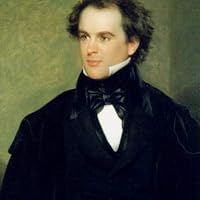
Nathaniel Hawthorne was a 19th century American novelist and short story writer. He is seen as a key figure in the development of American literature for his tales of the nation's colonial history. Shortly after graduating from Bowdoin College, Hathorne changed his name to Hawthorne. Hawthorne anonymously published his first work, a novel titled Fanshawe, in 1828. In 1837, he published Twice-Told Tales and became engaged to painter and illustrator Sophia Peabody the next year. He worked at a Custom House and joined a Transcendentalist Utopian community, before marrying Peabody in 1842. The couple moved to The Old Manse in Concord, Massachusetts, later moving to Salem, the Berkshires, then to The Wayside in Concord. The Scarlet Letter was published in 1850, followed by a succession of other novels. A political appointment took Hawthorne and family to Europe before returning to The Wayside in 1860. Hawthorne died on May 19, 1864, leaving behind his wife and their three children. Much of Hawthorne's writing centers around New England and many feature moral allegories with a Puritan inspiration. His work is considered part of the Romantic movement and includes novels, short stories, and a biography of his friend, the United States President Franklin Pierce.

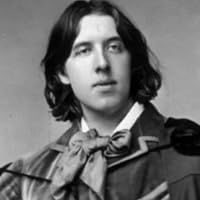
Oscar Fingal O'Flahertie Wills Wilde was an Irish playwright, poet, and author of numerous short stories, and one novel. Known for his biting wit, and a plentitude of aphorisms, he became one of the most successful playwrights of the late Victorian era in London, and one of the greatest celebrities of his day. Several of his plays continue to be widely performed, especially The Importance of Being Earnest. As the result of a widely covered series of trials, Wilde suffered a dramatic downfall and was imprisoned for two years hard labour after being convicted of "gross indecency" with other men. After Wilde was released from prison he set sail for Dieppe by the night ferry. He never returned to Ireland or Britain, and died in poverty.

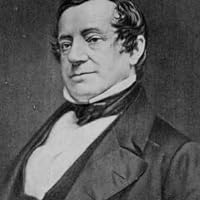
People remember American writer Washington Irving for the stories " Rip Van Winkle " and " The Legend of Sleepy Hollow ," contained in The Sketch Book (1820). This author, essayist, biographer and historian of the early 19th century wrote newspaper articles under the pseudonym Jonathan Oldstyle to begin his literary career at the age of nineteen years. In 1809, he published The History of New York under his most popular public persona, Diedrich Knickerbocker. Historical works of Irving include a five volume biography of George Washington (after whom he was named) as well as biographies of Oliver Goldsmith, Muhammad, and several histories, dealing with subjects, such as Christopher Columbus, the Moors, and the Alhambra, of 15th-century Spain. John Tyler, president, appointed Irving to serve as the first Spanish speaking United States minister to Spain from 1842 to 1846.


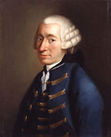
Tobias George Smollett was born in Dalquhurn, now part of Renton, Scotland, to a prosperous family and educated at the University of Glasgow, where he studied to be a physician. Later he joined the British Royal Navy as a surgeon's mate. He was present at the disastrous battle against the Spanish at Cartagena in 1741. He married a British woman named Anne " Nancy" Lascelles, in Jamaica, 1747,and settled in England. In London, as a writer, he became successful. The Adventures of Roderick Random (1748), a picaresque novel - like most of his books - made him a well known author. It was followed by The Adventures of Peregrine Pickle in 1751. But the failure of The Adventures of Ferdinand Count Fathom (1753) caused financial difficulties for him. Publishing The Adventures of Sir Launcelot Greaves (1762) didn't help. Writing poems, plays, travel and history books, essays, satires, doing translations and even becoming a literary critic and magazine editor, Dr. Smollett struggled all his short life against poverty, he traveled to Italy, to regain his health, but died of tuberculosis near Livorno, in 1771. Ironically finishing his masterpiece, The Expedition of Humphry Clinker, a few months before his death. Charles Dickens was a great admirer of Tobias Smollett, even visiting his grave site.

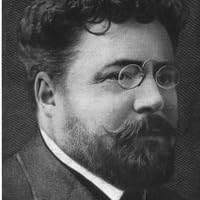
Gaston Louis Alfred Leroux was a French journalist and author of detective fiction. In the English-speaking world, he is best known for writing the novel The Phantom of the Opera (Le Fantôme de l'Opéra, 1910), which has been made into several film and stage productions of the same name, such as the 1925 film starring Lon Chaney, and Andrew Lloyd Webber's 1986 musical. It was also the basis of the 1990 novel Phantom by Susan Kay. Leroux went to school in Normandy and studied law in Paris, graduating in 1889. He inherited millions of francs and lived wildly until he nearly reached bankruptcy. Then in 1890, he began working as a court reporter and theater critic for L'Écho de Paris. His most important journalism came when he began working as an international correspondent for the Paris newspaper Le Matin. In 1905 he was present at and covered the Russian Revolution. Another case he was present at involved the investigation and deep coverage of an opera house in Paris, later to become a ballet house. The basement consisted of a cell that held prisoners in the Paris Commune, which were the rulers of Paris through much of the Franco-Prussian war. He suddenly left journalism in 1907, and began writing fiction. In 1909, he and Arthur Bernède formed their own film company, Société des Cinéromans to simultaneously publish novels and turn them into films. He first wrote a mystery novel entitled Le mystère de la chambre jaune (1908; The Mystery of the Yellow Room), starring the amateur detective Joseph Rouletabille. Leroux's contribution to French detective fiction is considered a parallel to Sir Arthur Conan Doyle's in the United Kingdom and Edgar Allan Poe's in America. Leroux died in Nice on April 15, 1927, of a urinary tract infection.

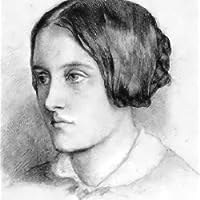
Christina Georgina Rossetti, sister of Dante Gabriel Rossetti, wrote lyrical religious works and ballads, such as "Up-hill" (1861). Frances Polidori Rossetti bore this most important women poet writing in nineteenth-century England to Gabriele Rossetti. Despite her fundamentally religious temperament, closer to that of her mother, this youngest member of a remarkable family of poets, artists, and critics inherited many of her artistic tendencies from her father. Dante made seemingly quite attractive if not beautiful but somewhat idealized sketches of Christina as a teenager. In 1848, James Collinson, one of the minor pre-Raphaelite brethren, engaged her but reverted to Roman Catholicism and afterward ended the engagement. When failing health and eyesight forced the professor into retirement in 1853, Christina and her mother started a day school, attempting to support the family, but after a year or so, gave it away. Thereafter, a recurring illness, diagnosed as sometimes angina and sometimes tuberculosis, interrupted a very retiring life that she led. From the early 1860s, she in love with Charles Cayley, but according to her brother William, refused to marry him because "she enquired into his creed and found he was not a Christian." Milk-and-water Anglicanism was not to her taste. Lona Mosk Packer argues that her poems conceal a love for the painter William Bell Scott, but there is no other evidence for this theory, and the most respected scholar of the Pre-Raphaelite movement disputes the dates on which Packer thinks some of the more revealing poems were written. All three Rossetti women, at first devout members of the evangelical branch of the Church of England, were drawn toward the Tractarians in the 1840s. They nevertheless retained their evangelical seriousness: Maria eventually became an Anglican nun, and Christina's religious scruples remind one of Dorothea Brooke in George Eliot's Middlemarch : as Eliot's heroine looked forward to giving up riding because she enjoyed it so much, so Christina gave up chess because she found she enjoyed winning; pasted paper strips over the antireligious parts of Swinburne's Atalanta in Calydon (which allowed her to enjoy the poem very much); objected to nudity in painting, especially if the artist was a woman; and refused even to go see Wagner's Parsifal, because it celebrated a pagan mythology. After rejecting Cayley in 1866, according one biographer, Christina (like many Victorian spinsters) lived vicariously in the lives of other people. Although pretty much a stay-at-home, her circle included her brothers' friends, like Whistler, Swinburne, F.M. Brown, and Charles Dodgson (Lewis Carroll). She continued to write and in the 1870s to work for the Society for Promoting Christian Knowledge. She was troubled physically by neuralgia and emotionally by Dante's breakdown in 1872. The last 12 years of her life, after his death in 1882, were quiet ones. She died of cancer.